
ProQual Level 5 Diploma in Fire Risk Assessment
An Ofqual regulated advanced fire risk assessment qualification for professionals working in high risk buildings and complex buildings, with direct tutor support, practical learning, and a clearer route into advanced professional practice.
This Level 5 Diploma in Fire Risk Assessment is designed for experienced fire risk assessors and fire safety professionals who need a recognised advanced qualification for complex or high risk premises. It combines regulated assessment, direct tutor support, small group delivery, and practical learning shaped by real consultancy work in higher risk settings.
February 2026 syllabus / Updated 12 April 2026
Key details at a glance
A regulated advanced qualification for experienced professionals leading fire risk assessment activity in complex or high risk premises, or building structured competence for higher level fire risk assessment work.
Qualification
ProQual Level 5 Diploma in Fire Risk Assessment
Qualification number
610/7064/6
Level
RQF Level 5 advanced route aligned to the BS 8674:2025 competence framework
Study focus
Scope
High risk and complex buildings
Delivery
Face to face and online routes with tutor support
Assessment
Portfolio of evidence, applied tasks, practical activity, internal assessment and external quality assurance
Best suited to
Experienced fire risk assessors, consultants, auditors, regulators, designers, responsible persons and dutyholders working in or around high risk premises.
Price
£2,600 + VAT
Next dates
19 to 23 October 2026 and online by arrangement
Named tutor
Delivered by Simon Tudor with visible credentials, consultancy background, and practical sector experience that learners can verify.
Regulated qualification
Ofqual regulated ProQual diploma with a clearer credibility route than unregulated advanced attendance courses.
High risk focus
Built for higher consequence buildings where judgement, evidence, communication and defensible decision making matter.
Simon Tudor BSc (Hons), FSIDip, APAEWE, MIFSM, Tech IOSH
Simon Tudor is the founder of London Fire Consultants and lead tutor for this course. He works across commercial, healthcare, industrial, heritage and residential fire safety projects and brings current practice into the learning experience.
For learners, that means direct input from a named tutor who understands both regulated assessment standards and real world fire safety work. His background combines consultancy, teaching and applied fire risk assessment practice.
Simon’s professional profile includes advanced fire risk assessment, expert witness training, fire door surveying and regulated teaching qualifications, giving learners a stronger and more credible advanced route as they develop their fire risk assessment pathway.
Professional credentials
Tier 3 IFSM Registered Fire Risk Assessor. BAFE SP205 Validator. Level 4 Teaching Qualification. Fire Door Surveyor. Level 7 Expert Witness Evidence.
Professional membership, register status and awarding body links

Founder of London Fire Consultants and lead tutor for the advanced fire risk assessment pathway.
Who this course is designed for
This Fire Safety College course is suitable for professionals working in or with responsibility for fire safety in high risk and complex premises.
- Regulators including fire and rescue services, building control approvers and enforcement officers
- Assessors including fire risk assessors, safety consultants and auditors
- Designers including architects and building designers for new and existing buildings
- Dutyholders including responsible persons, building owners and facilities managers
High risk buildings include buildings with greater complexity, longer travel distances, larger fire spread potential, higher consequence occupancy, single stair arrangements, specialised hazards, or more complex management demands. Examples include high rise flats, complex factory commercial units, care homes, hotels and hospitals.
What practical learning looks like
This course is designed to help experienced learners move beyond description and into defensible advanced fire risk assessment practice.
Face to face cohorts include the strongest practical demonstration elements. Online learners complete the same qualification through structured guided study, applied tasks, case study work, and tutor support.



High risk building assessment
You learn how to plan, lead and report fire risk assessment activity in high risk buildings where the consequences of weak judgement are much higher.
External wall systems and fire spread
You strengthen your ability to review external wall risk, fire spread potential, and when deeper technical appraisal is required.
Fire strategy thinking
You develop stronger judgement around active and passive measures, engineered solutions, and what to do when standard guidance is not enough.
Intolerable risk and urgent action
You build the ability to identify when life safety risk is intolerable and when immediate action, evacuation or urgent intervention is required.
Advanced reporting and communication
You practise turning complex findings into clear, defensible reports and action plans that dutyholders can understand and act on.
Professional development
You review your own competence, identify gaps, and build a development plan to maintain credibility in advanced fire risk assessment work.
Technology used during the Level 5 course
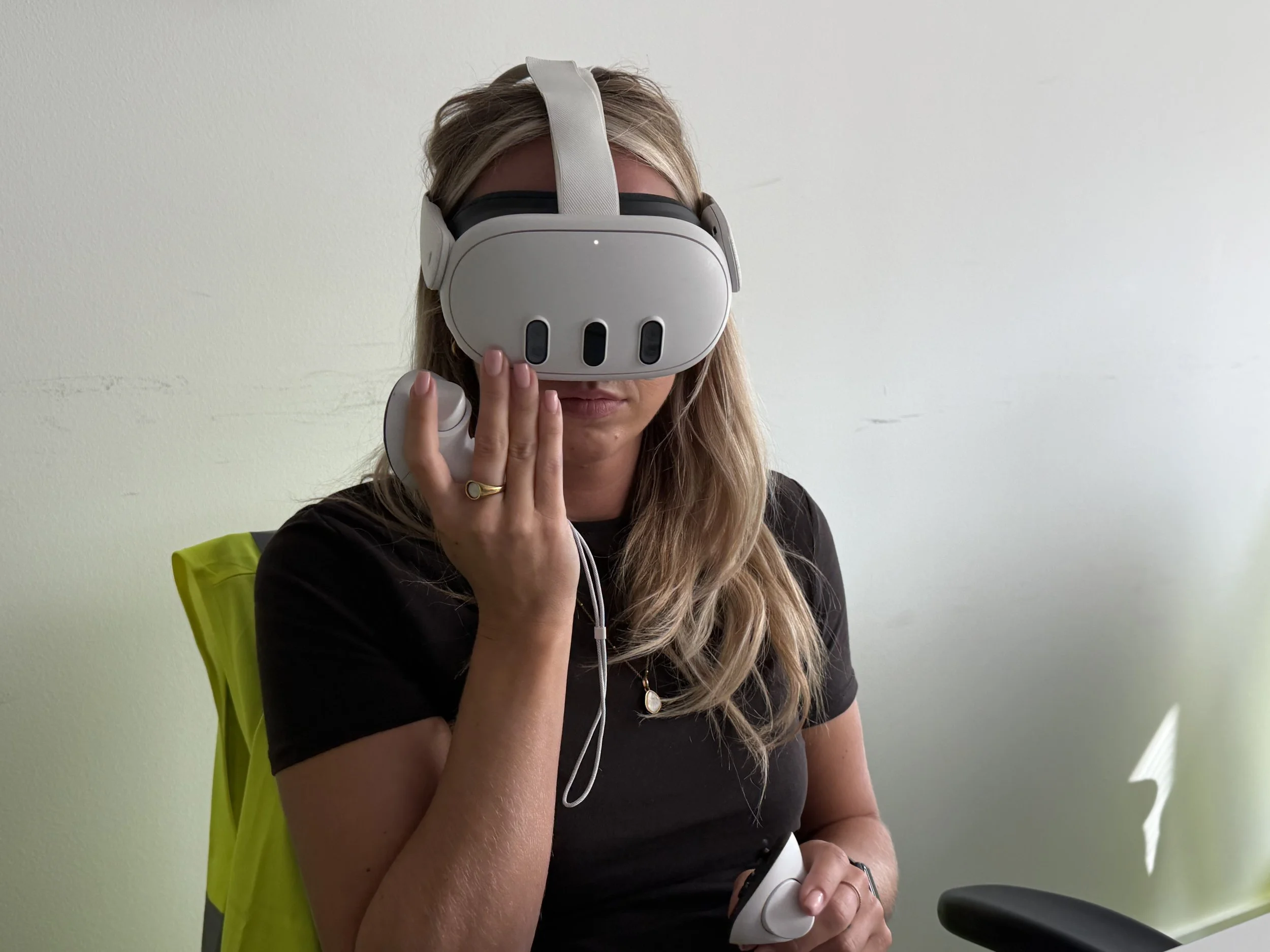
Each delegate is issued an iPad for the duration of the course to access publications, RiskBase software, case studies and to use during passive fire protection inspections.
This helps learners work through advanced scenarios using the same type of practical digital tools that support real reporting and inspection activity.
This course is not the right route for everyone
Not for complete beginners
If you are new to fire risk assessment and need a starting point, Level 3 is usually the better first move.
Not for low risk only practice
If your work is still focused on straightforward low or medium risk premises, Level 4 may be the better progression step before Level 5.
Not for weak evidence routes
This is not an attendance only course. It requires structured written evidence, professional judgement and applied assessment work.
Entry requirements
This course is an advanced route for learners who already have significant fire risk assessment grounding and need a recognised qualification for higher risk work.
Minimum entry expectations
- You should normally hold the ProQual Level 4 Certificate in Fire Risk Assessment, or an equivalent qualification
- Or you should have at least five years demonstrable occupational experience conducting fire risk assessments
- You should be able to complete professional written work in English
- This is an advanced route. It is not designed as an entry point into fire risk assessment
Is this the right level for you?
| You are new to fire risk assessment and need a starting point. | Level 3 is likely to be the better first step. |
| You already work in low or medium risk premises and need structured progression. | Level 4 may be the better route before Level 5. |
| You already assess complex buildings or need advanced level practice in high risk premises. | Level 5 is likely to be the right route. |
| You are unsure which level matches your experience. | Contact us before you enrol and we will advise on the right level. |
How this Level 5 course compares
Buyers should compare more than the headline price. The key questions are who teaches it, how clear the assessment process is, whether it is genuinely built for high risk work, and whether the progression and competence claims are credible.
| What to compare | London Fire Consultants | Typical low cost provider | Large national provider |
|---|---|---|---|
| Qualification route | Regulated ProQual Level 5 Diploma in Fire Risk Assessment | May be regulated, but may emphasise speed over depth | Often regulated, with stronger brand recognition but usually higher overall cost |
| Support model | Named tutor, structured guidance and direct feedback during portfolio development | Support may be lighter and more reactive | Support is often structured, but may feel less personal |
| High risk focus | Explicit emphasis on complex and high risk buildings, advanced judgement and defensible reporting | Varies significantly by provider | Often strong on scale, but not always clear about named tutor delivery |
| Practical credibility | Delivered by a practising consultancy with live sector experience | Varies significantly by provider | Often strong organisational credibility, but not always a practitioner led model |
| Best fit | Experienced professionals who want a regulated advanced course with visible support and stronger credibility | Learners who mainly want the lowest upfront cost | Learners who prioritise scale or brand over price |
How the Level 5 course is assessed
Step 1. Structured learning across four mandatory units
You complete guided learning across all four mandatory units that make up the ProQual Level 5 Diploma in Fire Risk Assessment. Assessment is based on evidence produced across the qualification, not attendance alone.
Step 2. Advanced written assessment workload
You complete a substantial written portfolio. Learners should expect consistent written work, applied tasks, scenario based responses and reasoned professional judgements.
Step 3. Practical and applied assessment activity
Your evidence is not limited to theory. The course requires application to high risk buildings, external wall systems, active and passive measures, reporting and professional decision making.
Step 4. What strong evidence looks like
Good evidence is specific, reasoned and defensible. You are expected to identify the issue, explain the risk, justify your view, and communicate a proportionate action plan in clear professional language.
Step 5. What support is allowed
You are supported through guided teaching, course materials, tutor input, directed study and assessor feedback. Your final submitted evidence must still be your own work and judgement.
Step 6. Completion and achievement
To achieve the qualification, you must meet all learning outcomes and assessment criteria across all four mandatory units through a portfolio that satisfies internal assessment, internal quality assurance and ProQual external quality assurance.
What’s covered in the Level 5 diploma
1. Undertaking a fire risk assessment for high risk buildings
This unit develops your ability to plan, lead and report a fire risk assessment for a high risk building, including inspection scope, hazard identification, control measures, reporting and immediate action planning.
2. Managing the risk of fire in high risk buildings
This unit strengthens your judgement where cost, occupancy, management capability and technical risk collide, including external wall systems, fire strategy thinking and intolerable risk decisions.
3. Advanced fire risk assessment
This unit focuses on leading advanced fire risk assessments for high risk buildings, analysing complex information, applying research and technical resources, and justifying your recommendations.
4. Professional development as an advanced fire risk assessor
This unit covers maintaining competence, identifying development gaps, planning CPD, and contributing to better practice through mentoring and leadership.
How this Level 5 course maps to BS 8674:2025
Advanced positioning
This course is aimed at learners leading fire risk assessment activity in complex or high risk buildings. It is designed for advanced practice rather than entry level learning.
Competence focused
The qualification is based on assignments, applied tasks and professional judgement. That supports a competence based route rather than attendance only training.
Professional credibility
The course supports the advanced competence expectations described in BS 8674:2025 and is intended for higher consequence fire risk assessment work.
Important clarification
This course is aligned to the BS 8674:2025 competence framework. It should not be described as approved or certified by BS 8674 itself. The regulated qualification is awarded by ProQual.
Face to face Level 5 course dates in Farnborough
Online enrolment remains available for learners who need a flexible study route. Face to face delivery takes place in Farnborough, Hampshire, GU14 7NA.
Face to face delivery
4 places remaining
Farnborough, Hampshire, GU14 7NA
Book nowClear standards. Direct support. Real progression.
This course is designed to give experienced professionals a more credible advanced route in fire risk assessment, with named tutor support, regulated quality assurance, and practical relevance to high risk work.
Led by Simon Tudor
This course is taught by Simon Tudor, founder of London Fire Consultants, with visible credentials, sector experience and a published tutor profile.
Maximum five learners
Cohort numbers are capped at five learners. That means more direct tutor access, stronger discussion, closer feedback, and better control over learner support.
Ofqual regulated Level 5 diploma
The ProQual Level 5 Diploma in Fire Risk Assessment is an Ofqual regulated qualification on the Regulated Qualifications Framework.
What our learners say
Real feedback from learners who have completed training with London Fire Consultants. Their comments reflect the quality of teaching, practical learning, tutor support, and the value of real world fire safety insight delivered throughout the course.
“This course was over and above what I expected and I now feel positive and equipped to go forward to the next level. Thank you for also providing me with knowledge of software and CRM to help me build my business.”
Diana
“The course is well structured and allows you to learn at your own pace.”
Richard H
“Great Course. Really good to ask questions and particulars of my own job and what I do and get Simon’s insight and knowledge on it. Loved using VR to work through FRA scenarios.”
Holly
“Great content presented above and beyond by Simon and Justine. Looking forward to returning for future courses.”
Will D
“Found legislation and standard section a little difficult to understand but Simon gave examples and worked through it at a steady pace making sure we understood. Grateful. Really enjoyed practicals and VR.”
JJ
“Simon is extremely knowledgeable and the course was interesting and enjoyable.”
Syed J
“Really enjoyed the face to face course. Simon is a wealth of knowledge and experience and Justine makes you feel so welcome and is also a fountain of knowledge and support throughout. Thank you.”
Stacey B
“Detailed and well presented and tutor extremely knowledgeable.”
Ben C
“Simon and Justine are very professional and I look forward to returning to do other courses they offer.”
Aaron H
Brands that trust London Fire Consultants to deliver training
London Fire Consultants delivers training for a wide range of organisations across housing, healthcare, education, local government, policing, technical services and the private sector. Our learners include operational teams, managers, dutyholders, compliance professionals and organisations that need training grounded in real fire safety practice.
That trust is built on practical delivery, current sector knowledge, regulated qualifications and direct input from experienced professionals. Clients do not come to us for generic classroom content. They come to us for training that is relevant, technically sound and usable in the real world.







Training shaped by practice
Our courses are informed by live consultancy work, not just textbook summaries. That helps organisations train staff against the kinds of fire safety issues they actually face.
Suitable for different sectors
We work with local authorities, schools, care providers, policing organisations, commercial businesses and technical service firms. That range helps us adapt delivery to the setting, risk profile and learner role.
Credible and usable learning
Clients need more than attendance certificates. They need training that improves understanding, supports compliance and gives people practical confidence in their responsibilities.
Ready to build advanced competence in fire risk assessment?
Speak to London Fire Consultants about suitability, delivery format, current availability and whether Level 5 is the right route for your role and scope of practice.
Learner Review Videos
Diana - Fire Safety College Advanced Fire Risk Assessment Delegate
Mike -Fire Safety College Advanced Fire Risk Assessment Delegate
Daniel - Fire Safety College Advanced Fire Risk Assessment Delegate
Will - Fire Safety College Advanced Fire Risk Assessment Delegate
INTIAL ENROLMENT FORM
LEVEL 5 DIPLOMA IN FIRE RISK ASSESSMENT (ADVANCED)
****NEXT IN PERSON TRAINING AT FARNBOROUGH, HAMPSHIRE - 19 to 23 October 2026 ****
The ProQual Level 5 Diploma in Fire Risk Assessment and ProQual Level 5 Diploma in Fire Risk Assessment provide nationally recognised qualifications for those currently working in, or who want to work in the Fire Safety sector. These qualifications have been developed with, and aligned to, the intermediate and advanced fire risk assessment competencies outlined in BS 8674: 2025– Built Environment Framework for Competence of Individual Fire Risk Assessors.
COST: £2600 + VAT


