
How VR is changing fire risk assessment courses
London Fire Consultants Blog
How VR is changing fire risk assessment courses
Virtual reality is no longer a gimmick in fire safety training. Used properly, it gives learners a safer, more realistic way to build observation skills, test judgement, and develop confidence before they assess real premises.
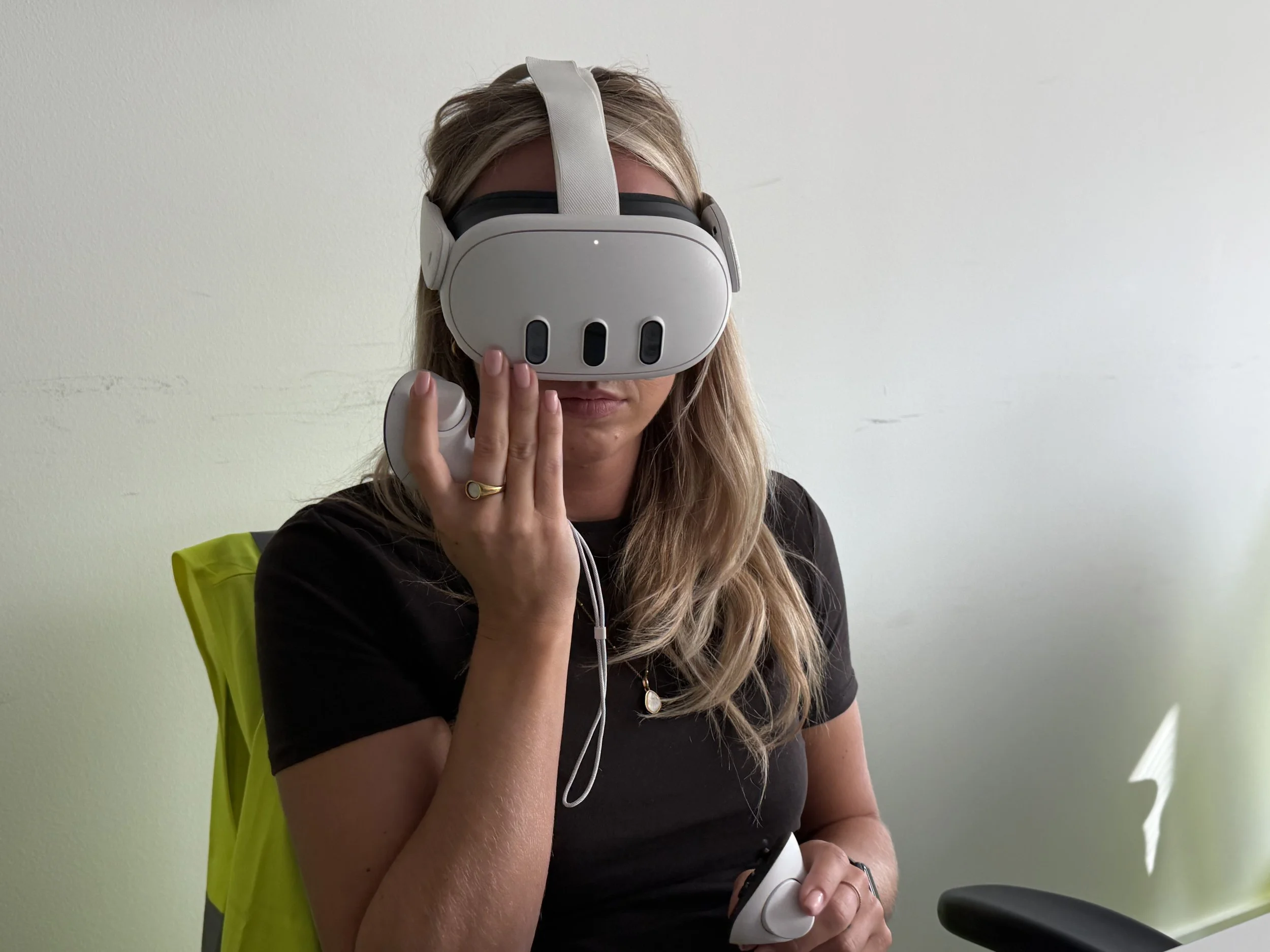
Learners using VR to explore risk, layout, fire precautions, and emergency scenarios in a controlled training environment.
Why VR matters in fire risk assessment training
Fire risk assessment is not just about learning legislation or memorising checklists. A competent assessor must observe, question, interpret, and decide. That is where many courses fall short. Learners can read guidance, sit in a classroom, and pass knowledge tests, yet still struggle when faced with a real building, real occupants, and real fire safety defects.
VR helps bridge that gap. It places the learner inside a realistic environment where they can move through spaces, identify hazards, review escape routes, look at fire doors, check housekeeping standards, and consider how people would respond in an emergency. This creates a more active learning process than static slides or classroom discussion alone.
Used properly, VR does not replace site experience. It strengthens it. It gives learners a structured way to practise before they step into live premises.
What VR can teach that a standard classroom often cannot
Traditional delivery is still important. Learners need the legal framework, the principles of fire development and spread, and an understanding of risk assessment methodology. But a slide deck cannot recreate the pressure of standing in an unfamiliar space and deciding what matters most.
VR allows learners to practise:
- spotting missed or hidden fire hazards
- reviewing means of escape from an occupant perspective
- recognising poor housekeeping and unsafe storage
- identifying weaknesses in compartmentation and fire doors
- considering who may be especially at risk
- making decisions where the answer is not obvious
- explaining findings clearly under tutor guidance
That matters because fire risk assessment is rarely a box ticking exercise. It depends on judgement. Judgement improves through structured exposure to realistic situations.
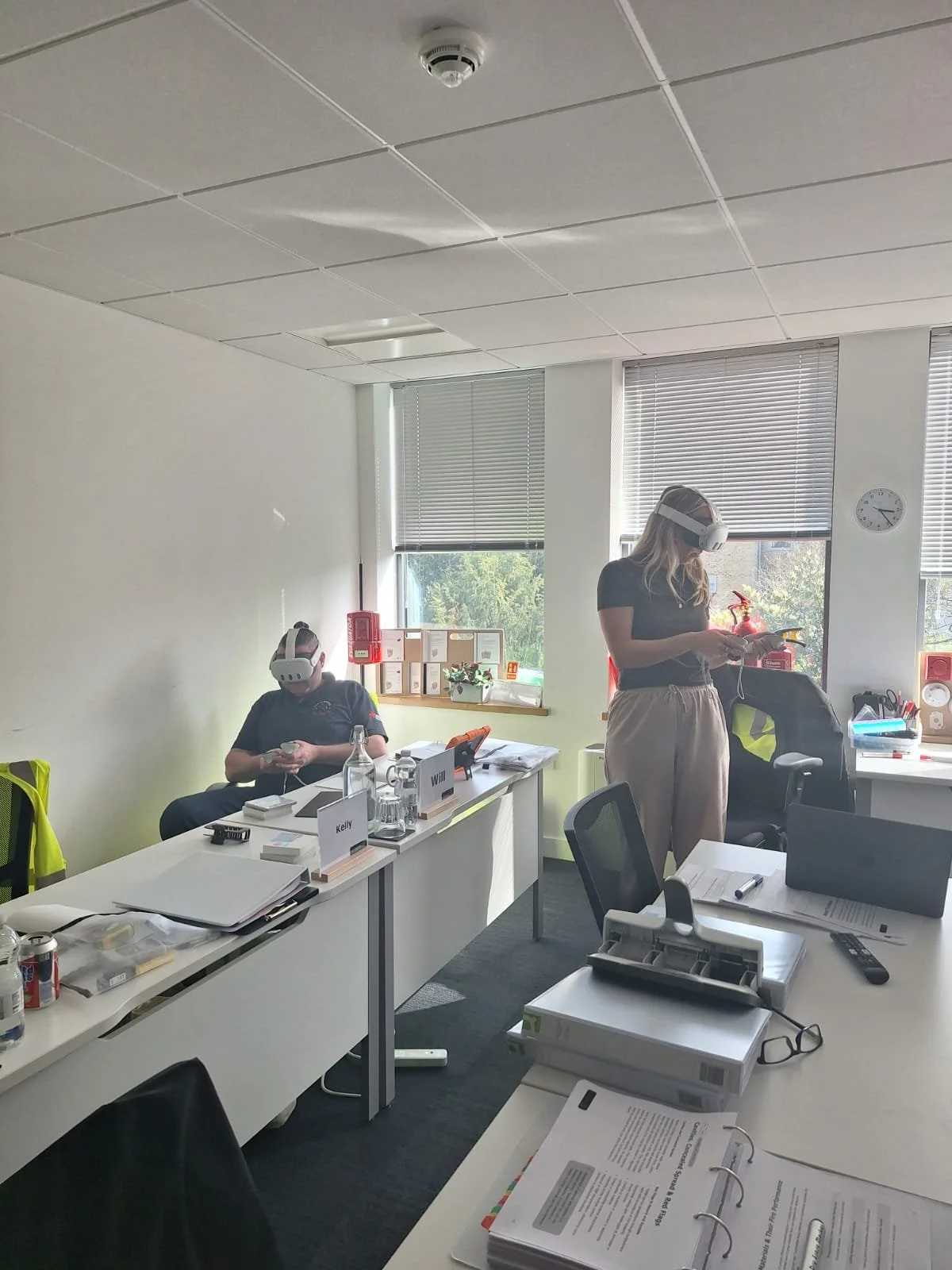
VR sessions can support discussion, observation exercises, and tutor led debriefs.
The value of immersion
One of the biggest strengths of VR is immersion. The learner is not simply looking at a photograph of a corridor or a still image of a staircase. They are placed inside an environment and must interact with it. They have to look up, down, behind doors, along routes, and around corners. That changes attention levels and often improves retention.
It also supports spatial awareness. In fire risk assessment, distance, travel direction, visibility, and the relationship between rooms and escape routes all matter. VR helps learners understand these issues in a way that flat images often cannot.
This is especially useful for new or developing assessors who have limited exposure to different building layouts and risk profiles.
VR should be used properly, not as a sales trick
There is a weak version of VR training and a strong version. The weak version is using headsets as a novelty. It may look modern, but it adds little if the scenario is shallow and the learning outcomes are vague.
The strong version is different. It is built around clear teaching aims. The tutor uses VR to test observation, prompt discussion, challenge assumptions, and connect what the learner sees back to legislation, guidance, and good practice. That is where the real value lies.
In other words, VR works best as part of a blended learning model. It should sit alongside tutor input, technical discussion, practical exercises, and structured feedback.
Examples of how VR can be used on a fire risk assessment course
A well designed VR session can expose learners to situations that would be difficult, disruptive, or unsafe to recreate in a live setting.
- walking through a building with poor housekeeping and blocked exits
- reviewing travel distances and final exit arrangements
- spotting defects in doors, signage, or emergency lighting
- assessing spaces used by vulnerable occupants
- testing decisions during a developing fire or evacuation scenario
- comparing good practice against poor practice in similar environments
That variety helps learners move beyond theory and into applied judgement.
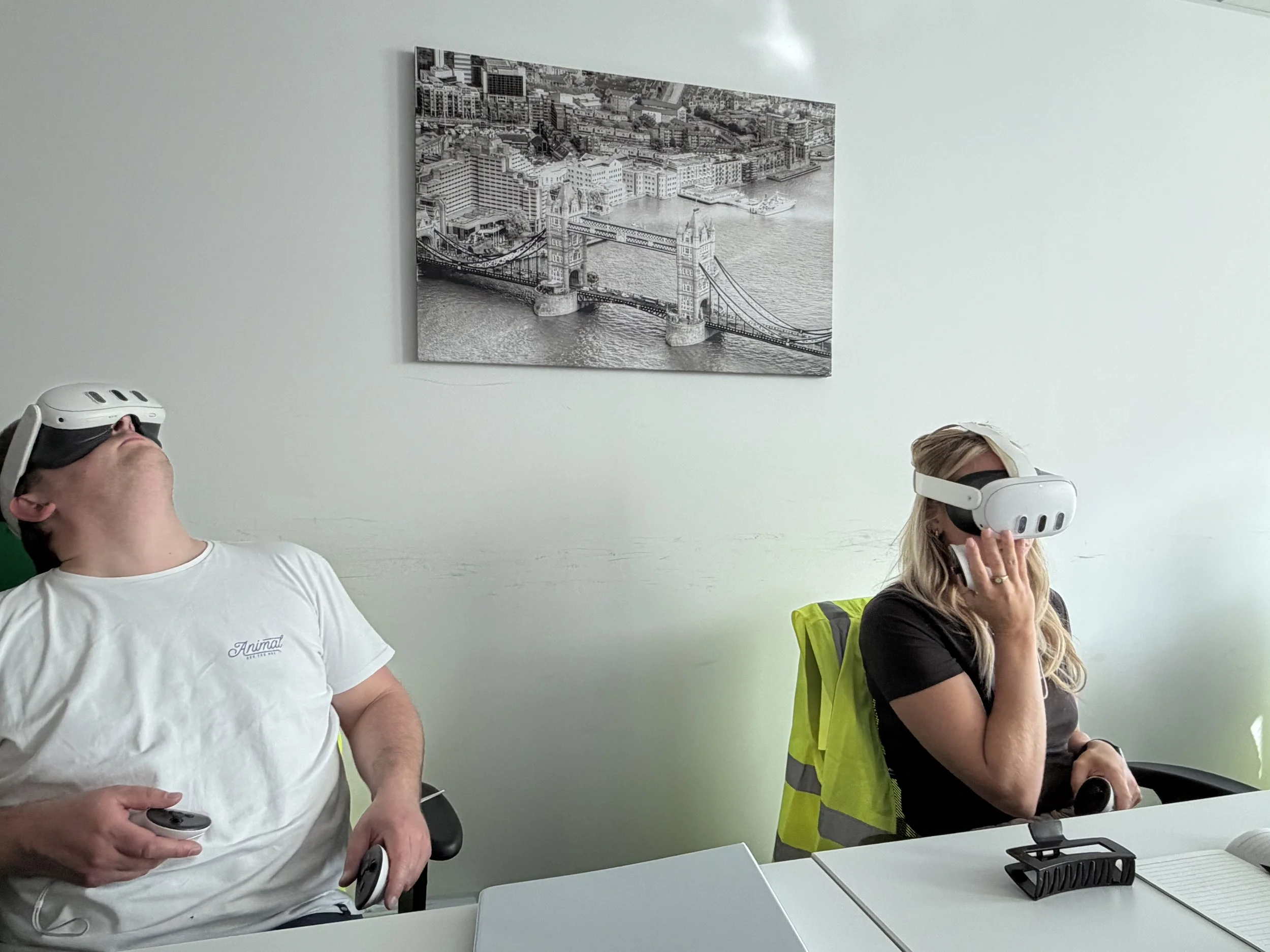
VR can form part of a wider tutor led session with discussion, debrief, and technical input.
What this means for learners
For learners, the main benefit is simple. VR gives you more practice before your judgement is tested in real settings. It helps turn passive learning into active learning. It also makes technical issues easier to understand because you can see them in context.
That can be particularly useful for people progressing into fire risk assessment from facilities management, health and safety, housing, estates, compliance, or operational fire safety roles. Many bring valuable experience, but they still need structured exposure to assessment scenarios.
VR can reduce that gap. Not by lowering standards, but by giving learners more chances to observe, think, and improve.
What this means for employers
Employers want more than certificates. They want people who can enter premises, notice what matters, and write sensible findings. That requires more than a theory course.
A course that includes VR can support stronger learner engagement and better practical understanding. It can also expose learners to a wider range of scenarios than a single site visit ever could.
That does not guarantee competence on its own. Competence still depends on training quality, assessment, supervision, and ongoing development. But VR can be a useful part of that pathway.
Our view at London Fire Consultants
At London Fire Consultants, we believe fire risk assessment training should be practical, credible, and rooted in real world application. Learners do not just need information. They need opportunities to apply it.
That is why VR can play a valuable role within a broader training model. When combined with tutor guidance, technical discussion, case based learning, and robust assessment, it helps learners build stronger observational skills and greater confidence.
The aim is not to impress learners with technology. The aim is to help them think more clearly, assess more carefully, and perform better in practice.
Looking for a fire risk assessment course with practical learning?
London Fire Consultants delivers fire risk assessment training designed to move beyond theory. Our courses are built to develop practical understanding, stronger judgement, and confidence in real world fire safety work.
If you want training that combines technical knowledge with applied learning, explore our courses or contact the team to discuss the right route for you or your organisation.