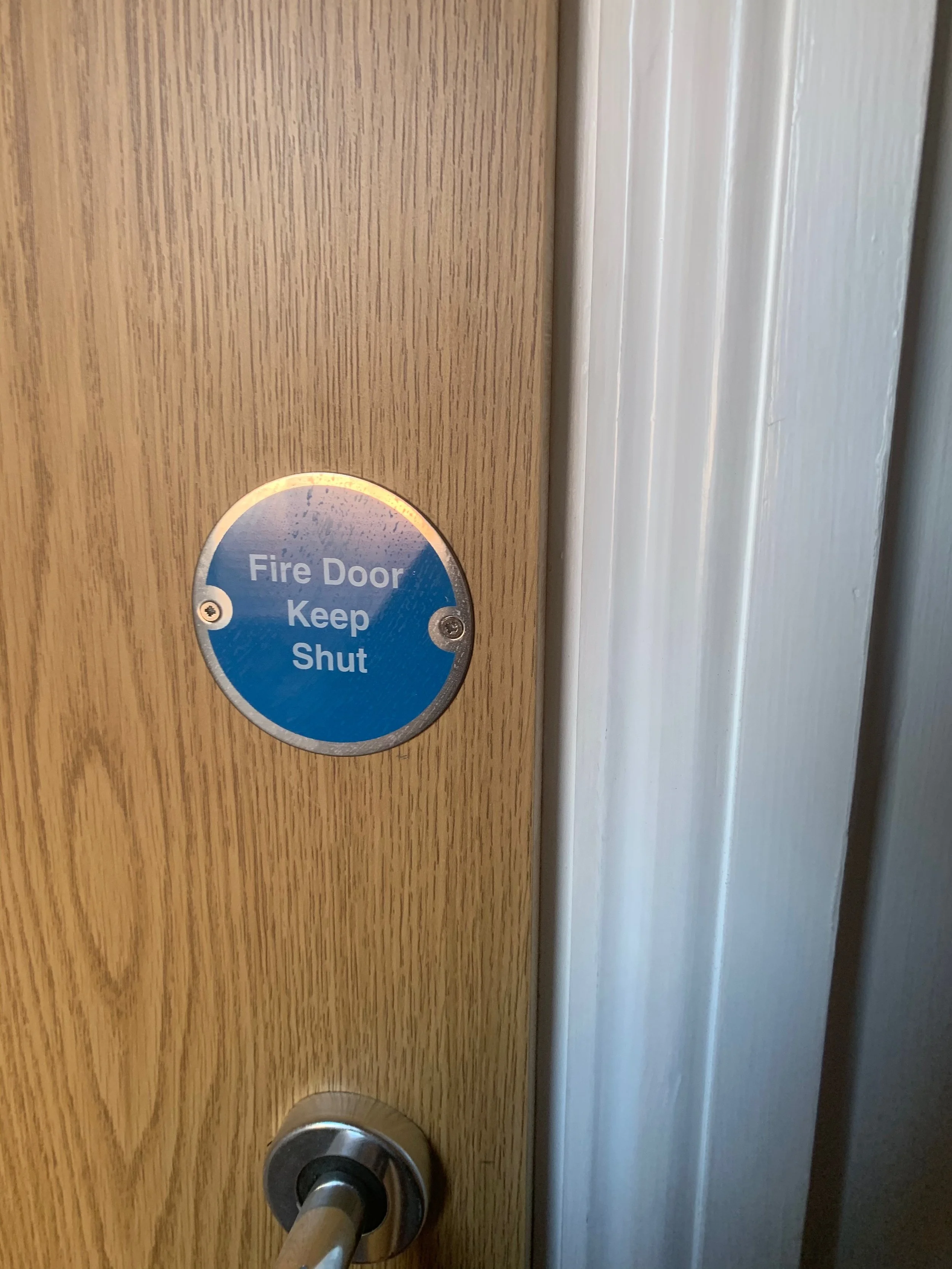
BS 8214:2026 Has Arrived. What It Means for Fire Door Compliance
The publication of BS 8214:2026 is an important development for the fire door sector. The new code of practice, published on 20 March 2026, replaces BS 8214:2016, which was withdrawn on the same date. The change is significant. The older standard was focused on timber based fire door assemblies, whereas the new standard is titled “Fire-resisting and smoke control doors – Practical considerations concerning specification, design and performance in use – Code of practice.” That title alone signals a broader and more modern scope, with a stronger emphasis on specification, design, installation, maintenance and performance in use across fire-resisting and smoke control doors.
For duty holders, landlords, managing agents, contractors and responsible persons, this is not a minor update. Fire doors are too often treated as static products when, in reality, they are life safety systems that depend on correct specification, installation, inspection, maintenance and ongoing management. A certificated leaf does not guarantee compliant performance once glazing, seals, frames, hinges, closers, gaps, ironmongery or site alterations start to deviate from tested evidence. That is where competent inspection becomes critical. The move to BS 8214:2026 should prompt organisations to review existing fire door strategies, inspection regimes and maintenance arrangements rather than assume historic installations remain acceptable without scrutiny.
At London Fire Consultants, we provide professional fire door inspection services to help clients identify defects, assess risk and prioritise remedial action. Our inspections are designed to go beyond superficial checks. We examine the practical condition and likely performance of fire-resisting door installations, including the relationship between doors, frames, hinges, self-closing devices, seals, glazing, signage, gaps and the overall installation quality. Where deficiencies are found, we provide clear reporting so clients understand what is wrong, why it matters and what needs to happen next. In a compliance environment that is becoming more demanding, that level of clarity matters.
This is particularly relevant in residential blocks, higher risk buildings, commercial premises, converted buildings and properties with a long history of ad hoc repairs or piecemeal upgrades. In these settings, fire doors frequently fail not because nobody bought the right product, but because the installation, inspection history and ongoing maintenance were weak. A door can look acceptable to the untrained eye and still fail in critical areas. Gaps may be excessive. Closers may be ineffective. Ironmongery may be unsuitable. Glazing systems may be inconsistent with tested evidence. Seals may be missing, damaged or incorrectly fitted. These are not cosmetic issues. They go to the heart of compartmentation and life safety.
Alongside our inspection work, The Fire Safety College delivers the ProQual Level 3 Award in the Inspection and Testing of Fire Resisting Door Installations, a nationally recognised and Ofqual regulated qualification. The course is designed to demonstrate competence in the inspection and testing of fire resisting door installations and covers the regulations and standards applying to fire doors, different door types and their uses, inspection and testing procedures, pass and fail criteria, client advice following inspection failure, and the practical ability to inspect, test and report on fire door installations. It is a Level 3 qualification with 20 hours total qualification time, including 15 guided learning hours, and it is assessed on a pass or fail basis.
This training is well suited to those who need more than awareness. It is aimed at people who want structured, regulated learning in fire door inspection and testing, whether they are inspectors, fire safety practitioners, contractors, facilities professionals or those with responsibility for building compliance. In a market where weak fire door knowledge is still common, proper training is one of the clearest ways to improve standards. It also helps organisations build internal competence rather than relying entirely on external commentary without understanding the basis of the findings.
The arrival of BS 8214:2026 should be taken seriously. It is another reminder that fire door compliance is not achieved by assumption, product labels or vague maintenance records. It depends on evidence, competence and scrutiny. If you need fire door inspections, support in understanding defects within your building stock, or regulated Level 3 fire door inspection training, London Fire Consultants and The Fire Safety College are ready to help.